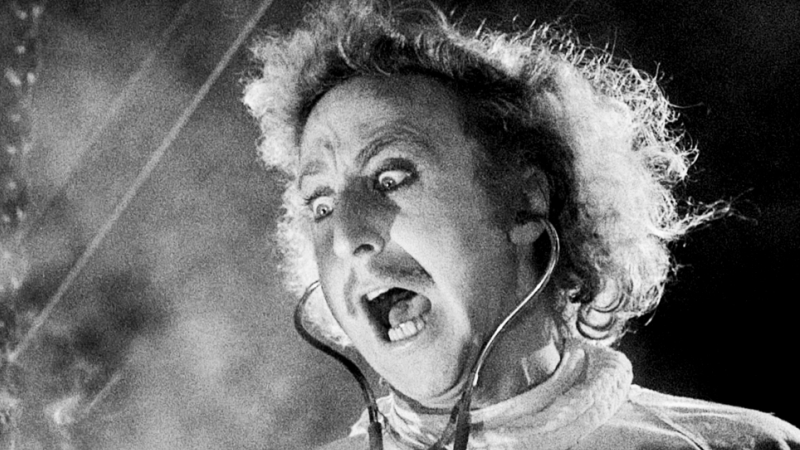
Few fictional characters are as instantly recognizable as the mad scientist.
Picture the image: a dishevelled genius working late at night in a dark laboratory, surrounded by strange machines, bubbling chemicals and electrical equipment. Lightning flashes outside. The scientist laughs maniacally as an experiment goes terribly wrong—or perhaps succeeds far too well.
This image has become one of the most familiar stereotypes in popular culture.
But where did the idea come from?
The mad scientist is more than simply a scientist who has become mentally unstable. The character represents a recurring cultural fear: what happens when human beings gain the power to do something before they have developed the wisdom to understand whether they should do it?
The mad scientist has appeared in Gothic novels, science fiction, horror films, comic books, television, animation and even comedy. Sometimes the character is genuinely evil. Sometimes he is a tragic figure. Sometimes he is simply eccentric. And sometimes, as in the case of some modern versions, the “madness” is almost entirely comic.
The history of the mad scientist is therefore closely connected to the changing way that Western society has viewed science, technology and scientific progress.
What Is a Mad Scientist?
The term “mad scientist” usually describes a fictional scientist whose research has become dangerous, unethical or obsessive.
The typical mad scientist may:
- Conduct experiments without regard for ethical consequences
- Attempt to create or control life
- Seek immortality
- Develop weapons of mass destruction
- Experiment on human beings or animals
- Attempt to conquer the world
- Pursue knowledge for its own sake
- Believe that normal moral rules do not apply to genius
The character often combines intelligence with a lack of wisdom.
The mad scientist may be brilliant enough to solve problems that no one else can solve. The problem is that he may not understand the consequences of his own discoveries—or may understand them perfectly and simply not care.
The archetype is also frequently associated with isolation. The scientist works alone, often in a laboratory removed from normal society. The laboratory itself becomes an important part of the character's identity.
The classic mad scientist is not merely a person who studies science.
He is someone who has crossed a boundary.
That boundary might be:
- Between life and death
- Between human and animal
- Between humanity and artificial intelligence
- Between science and magic
- Between knowledge and power
- Between legitimate research and dangerous obsession
The mad scientist is therefore often a character who is “playing God.”
Was Frankenstein the First Mad Scientist?
The most common answer is Victor Frankenstein.
Mary Shelley's Frankenstein; or, The Modern Prometheus, first published in 1818, is generally considered the earliest major literary example of the modern mad-scientist archetype.
There are important qualifications.
Earlier literature contained figures who experimented with forbidden knowledge, alchemy and supernatural forces. The idea of a scholar who goes too far was certainly not invented in 1818.
However, Victor Frankenstein is usually considered the first major character to combine several features that became central to the mad scientist:
- Scientific experimentation
- The creation of life
- Obsessive research
- Isolation
- The violation of natural boundaries
- A catastrophic result
- A scientist who is forced to confront the consequences of his work
It is also worth noting that the word “scientist” itself was not commonly used when Mary Shelley wrote the novel. The term was coined in the nineteenth century, after Frankenstein was published.
Victor Frankenstein is therefore not a “mad scientist” in the modern professional sense. He is a student of natural philosophy who becomes obsessed with discovering the secret of life.
Nevertheless, he established the essential pattern.
A brilliant young researcher discovers something that should perhaps remain unknown.
He succeeds.
The result is horrifying.
And the real tragedy begins when the creator refuses to take responsibility for what he has created.
The Background to Frankenstein
The origins of the mad-scientist archetype cannot be separated from the intellectual environment of the late eighteenth and early nineteenth centuries.
This was a period of extraordinary scientific change.
The Enlightenment had encouraged confidence in reason and human knowledge.
The Industrial Revolution was transforming society.
New discoveries were being made in:
- Chemistry
- Biology
- Physics
- Medicine
- Electricity
The boundaries of human knowledge seemed to be expanding rapidly.
At the same time, there was uncertainty about where this expansion might lead.
Scientific discovery could improve human life.
But new knowledge could also be dangerous.
One important influence on Mary Shelley's story was the growing interest in galvanism.
Galvanism involved the study of electrical stimulation of muscles and nerves. Experiments had demonstrated that electrical currents could cause the limbs of dead animals to move.
To modern scientists, this was a physiological phenomenon.
To people living in the early nineteenth century, however, the possibility that electricity could cause dead tissue to move could appear almost supernatural.
The boundaries between science and magic seemed less clear than they do today.
Mary Shelley was also surrounded by people interested in philosophy, science and radical ideas.
In 1816, she travelled to Switzerland with Percy Bysshe Shelley, Lord Byron and others.
During their stay near Lake Geneva, Byron suggested that everyone should write a ghost story.
Mary Shelley struggled to find an idea.
Then, according to her later account, she imagined a young scientist who had created life and was horrified by his creation.
That idea became Frankenstein.
The novel's subtitle, The Modern Prometheus, was highly significant.
In Greek mythology, Prometheus stole fire from the gods and gave it to humanity.
He was punished for doing so.
Victor Frankenstein similarly seeks knowledge that may belong to the divine realm.
He wants to discover the secret of life.
The question is not simply whether he can do it.
The question is whether he has the right to do it.
That question has remained at the centre of the mad-scientist story ever since.
Victor Frankenstein: The Original Mad Scientist
Victor Frankenstein is sometimes misunderstood because modern adaptations have changed his character.
In many films, he is portrayed as a fully formed, older scientist working in a dramatic laboratory.
In Shelley's novel, he is a young man whose scientific ambitions gradually become obsessive.
Victor is fascinated by the question of life and death.
He wants to understand how living beings function.
Eventually, he discovers a method of creating life from dead biological material.
The experiment succeeds.
But Victor is immediately horrified by his creation.
This is one of the most important aspects of the story.
Victor does not become a mad scientist simply because he creates the creature.
His tragedy is that he creates life and then abandons it.
The creature is not originally portrayed as a mindless monster.
It is intelligent, capable of language and capable of moral reflection.
It becomes violent after being rejected and persecuted.
This makes the novel more complicated than the familiar popular image.
The monster is not simply the product of science.
The tragedy is the result of:
- Scientific ambition
- Irresponsibility
- Social rejection
- Isolation
- Revenge
Victor's experiment has consequences that he never anticipated.
He wanted knowledge.
He did not understand responsibility.
This became one of the central themes of the mad-scientist archetype.
The scientist may be able to create something.
But can he control what he has created?
And if he cannot, who is responsible?
The Mad Scientist and the Nineteenth Century
The mad-scientist archetype developed during a period when scientific knowledge was rapidly expanding.
The nineteenth century witnessed extraordinary technological progress.
Railways transformed transportation.
Telegraphs transformed communication.
Industrialization transformed economies.
Medicine began to develop more scientific approaches.
Chemistry and physics were advancing rapidly.
Evolutionary theory challenged traditional understandings of humanity's place in nature.
The result was a mixture of optimism and anxiety.
Science promised progress.
But it also seemed to challenge traditional religious, philosophical and social assumptions.
The mad scientist became a fictional representation of this anxiety.
The character asked:
What happens if scientific progress moves faster than human morality?
This was particularly important in the later nineteenth century.
Scientific research increasingly involved experimentation, laboratories and specialized knowledge that ordinary people could not easily understand.
The scientist therefore became a potentially mysterious figure.
He possessed knowledge that other people did not have.
That knowledge could be used for good.
Or it could be used for destruction.
The mad scientist represented the fear that the scientist might become too powerful for society to control.
Dr. Jekyll and Mr. Hyde
One of the most important developments in the history of the archetype was Robert Louis Stevenson's Strange Case of Dr Jekyll and Mr Hyde, published in 1886.
Dr. Henry Jekyll is not a mad scientist in exactly the same way as Victor Frankenstein.
His experiment does not create an independent creature.
Instead, Jekyll attempts to separate the different aspects of his own personality.
The result is Edward Hyde.
The experiment becomes a metaphor for the danger of trying to divide human nature into neat categories.
Jekyll wants to separate good from evil.
Instead, he releases the darker side of his own personality.
The story therefore expands the mad-scientist idea.
The danger is not merely that science may create something new.
The danger is that scientific experimentation may reveal something that was already present.
Jekyll is both the scientist and the monster.
His experiment is a form of scientific self-destruction.
This idea would become extremely influential in later stories.
The scientist does not always create an external monster.
Sometimes the experiment transforms the scientist himself.
Dr. Moreau and the Ethics of Experimentation
H.G. Wells' The Island of Doctor Moreau, published in 1896, introduced another major variation on the mad scientist.
Doctor Moreau is a brilliant physiologist who conducts horrifying experiments on animals.
He attempts to transform animals into human-like creatures through surgery and experimentation.
The novel raises serious questions about:
- Vivisection
- Animal experimentation
- Human identity
- Evolution
- The relationship between humans and animals
Moreau does not simply want to discover knowledge.
He wants to reshape living beings.
His experiments are conducted with almost complete disregard for suffering.
The result is one of the clearest examples of the mad scientist as a figure who believes that scientific knowledge gives him the right to violate ethical boundaries.
Moreau also reflects late Victorian concerns about evolutionary theory.
If humans had evolved from animals, what exactly separated humanity from the animal world?
And if science could alter biological characteristics, could the boundaries between species be changed?
The novel's disturbing power comes from the fact that Moreau's experiments are not completely magical.
They are based on surgery and biological manipulation.
The horror therefore comes from the possibility that science might actually be able to alter living bodies.
The Scientist Who Wants to Conquer the World
Another important development was the mad scientist who does not simply conduct experiments.
He wants power.
The classic mad scientist increasingly became associated with:
- World domination
- Secret weapons
- Giant machines
- Mind control
- Artificial life
- Advanced technology
The character was no longer simply a scientist who had made a mistake.
He was now a scientific genius who believed that his knowledge gave him the right to rule.
This version of the character would become particularly important in twentieth-century science fiction and comic books.
The mad scientist became the intellectual counterpart to the traditional warlord or tyrant.
Instead of conquering nations with an army, he would conquer them with technology.
Rotwang in Metropolis
One of the most influential mad scientists in film was Rotwang in Fritz Lang's Metropolis.
The film was released in 1927.
Rotwang is a brilliant inventor who creates the Maschinenmensch, a robotic artificial human.
The character combined several elements that would become central to the cinematic image of the mad scientist:
- A mysterious laboratory
- Strange machinery
- Electrical equipment
- A physically unusual appearance
- Obsession
- Revenge
- The creation of artificial life
Rotwang was particularly important because he helped establish the visual language of the mad scientist.
His laboratory, filled with electrical arcs and complex machinery, influenced the appearance of countless later films.
The mad scientist's laboratory became a character in its own right.
It was the place where normal rules no longer applied.
The 1931 Film Frankenstein
The mad scientist became one of the most important figures in popular cinema through James Whale's 1931 film Frankenstein.
The film starred Colin Clive as Henry Frankenstein and Boris Karloff as the creature.
Although the film changed important details from Mary Shelley's novel, it had an enormous cultural impact.
The famous laboratory scene—with electrical equipment, machinery and lightning—became the definitive visual representation of the mad scientist.
The film also established many images that would become permanently associated with Frankenstein:
- The laboratory
- The electrical experiment
- The scientist shouting that the creature is alive
- The creature being brought to life through a dramatic experiment
It is important to remember that many of these images do not come directly from Shelley's novel.
They were developed through theatrical and cinematic adaptations.
Nevertheless, they became so influential that they now shape how many people imagine the original story.
The 1931 film also helped transform Victor Frankenstein into the modern popular image of the mad scientist.
The Mad Scientist and the Atomic Age
The Second World War and the development of nuclear weapons transformed the meaning of the mad scientist.
For much of the nineteenth century, the mad scientist was usually an individual working in isolation.
The twentieth century introduced a new reality.
Scientific research could now produce weapons capable of destroying entire cities.
The development of nuclear weapons demonstrated that science really could transform the world in ways that were difficult to control.
The mad scientist therefore became connected to fears about:
- Nuclear weapons
- Biological warfare
- Chemical weapons
- Genetic engineering
- Artificial intelligence
- Space technology
The question was no longer simply:
Can one scientist create a monster?
It became:
What happens when scientific knowledge gives humanity the ability to destroy itself?
This created a new type of mad scientist.
The scientist might not personally be insane.
The problem might be that society had created a system in which scientific genius could be placed in the service of destructive political goals.
Dr. Strangelove
Stanley Kubrick's Dr. Strangelove or: How I Learned to Stop Worrying and Love the Bomb offered one of the most famous satirical versions of the mad scientist.
The character of Dr. Strangelove is a brilliant former Nazi scientist who advises the American government on nuclear strategy.
He is physically eccentric and psychologically disturbing.
But the character's madness is not simply personal.
He represents a wider system of technological rationality.
The terrifying aspect of Dr. Strangelove is that the destruction of the world can result from rational calculations.
The people making decisions may not be traditional lunatics.
They may be highly educated experts.
They may understand mathematics, physics and military strategy.
The problem is that their expertise has been separated from moral responsibility.
The film therefore asks whether a person can be perfectly rational and still participate in madness.
This is a significant development in the history of the archetype.
The mad scientist is no longer necessarily the person who behaves irrationally.
He may be the person who applies extraordinary intelligence to an insane objective.
The Mad Scientist in Comic Books
The mad scientist became a central figure in comic books.
Superhero comics were particularly well suited to the archetype.
A scientist could develop:
- A powerful weapon
- A robot army
- A time machine
- A machine capable of controlling minds
- A device that could destroy the planet
Some of the most famous comic-book examples include:
Doctor Doom
Victor von Doom is one of the greatest examples of the scientific super-villain.
He is a genius inventor, an engineer, a sorcerer and the ruler of Latveria.
Unlike many mad scientists, Doom does not believe that he is insane.
He believes that he is the only person capable of saving the world.
His problem is that he believes salvation requires everyone to obey him.
See The History of Doctor Doom: From Fantastic Four Villain to Marvel’s Greatest Super-Villain
Lex Luthor
Lex Luthor has changed considerably over time.
In some versions, he is primarily a wealthy industrialist.
In others, he is a scientific genius and inventor.
His conflict with Superman is often built around the idea that human intelligence and technology should be capable of defeating even a superhuman alien.
Luthor represents the scientist whose genius becomes entangled with pride and resentment.
The Leader
The Leader, one of the Hulk's enemies, represents a more traditional super-scientific villain.
His intelligence becomes his primary superpower.
He is an example of the comic-book idea that extraordinary intelligence can become as dangerous as physical strength.
The High Evolutionary
The High Evolutionary is a more complex example.
He is a scientific genius who experiments with evolution and attempts to transform life.
Unlike a conventional villain, he is sometimes portrayed as a creator or even a protector.
His character demonstrates that the mad scientist can be morally ambiguous.
The question is not always whether the scientist is evil.
The question may be whether anyone should possess the power to redesign life.
The Mad Scientist in Science Fiction
Science fiction has often used the mad scientist to explore the consequences of technological progress.
The character appears in stories involving:
- Robots
- Artificial intelligence
- Genetic engineering
- Cloning
- Time travel
- Space travel
- Cybernetics
- Biological experimentation
The archetype can serve several different purposes.
Sometimes the scientist is a warning.
The character demonstrates what happens when scientific progress is not accompanied by ethics.
Sometimes the scientist is a tragic figure.
He or she makes a discovery that cannot be controlled.
Sometimes the scientist is a villain.
The character wants to use knowledge to acquire power.
And sometimes the scientist is a hero whose unconventional methods appear dangerous but ultimately save the day.
The basic archetype has therefore become more flexible over time.
The scientist is not always mad.
The story may instead ask whether the scientist's society is capable of understanding what he or she has discovered.
Famous Mad Scientists in Literature
Some of the most important literary examples include:
Victor Frankenstein — Frankenstein
The foundational example.
Victor creates life but fails to accept responsibility for his creation.
He represents the dangers of scientific ambition without moral responsibility.
Dr. Henry Jekyll — Dr. Jekyll and Mr. Hyde
Jekyll attempts to separate the moral elements of human nature.
His experiment reveals the danger of believing that science can solve the problem of human evil.
Doctor Moreau — The Island of Doctor Moreau
Moreau uses science to transform animals.
He represents the dangers of experimentation without compassion or ethical limits.
Griffin — The Invisible Man
H.G. Wells' invisible man is a brilliant scientist who discovers how to make himself invisible.
The power corrupts him.
His scientific achievement becomes a tool for crime and terror.
Griffin demonstrates another version of the archetype: the scientist who discovers something extraordinary and then becomes morally unrestrained.
Dr. Fu Manchu
Sax Rohmer's Fu Manchu is not simply a mad scientist, but he frequently combines scientific expertise with criminal genius.
He represents the villain whose knowledge is used to create weapons, poisons and elaborate schemes.
The character also reflects the racial and imperial anxieties of the period in which he was created.
This is an important reminder that fictional archetypes are shaped by the cultural assumptions of their time.
Famous Mad Scientists in Film
Film expanded the archetype dramatically.
Some of the most famous examples include:
Rotwang — Metropolis
The inventor of the artificial human.
He helped establish the visual language of the cinematic mad scientist.
Henry Frankenstein — Frankenstein
The scientist whose experiment creates life.
The film version became more famous in popular culture than the original literary character.
Dr. Moreau
The character has appeared in numerous film adaptations of Wells' novel.
He represents the scientist who experiments on living beings without ethical restraint.
Dr. Strangelove
A satirical version of the scientific expert whose knowledge has become connected to global destruction.
Dr. Emmett Brown — Back to the Future
Doc Brown is a much more sympathetic version of the archetype.
He is eccentric, obsessive and capable of dangerous experiments.
But he is fundamentally a heroic character.
His time machine demonstrates that the mad-scientist image can be used for comedy and adventure rather than horror.
Dr. Frankenstein in Young Frankenstein
Mel Brooks' film deliberately parodies the conventions of the mad scientist.
The laboratory, the machinery and the dramatic experiments are all familiar.
The comedy depends on the audience recognizing the established archetype.
Why Are Mad Scientists So Often Male?
The traditional mad scientist is overwhelmingly male.
This reflects the historical context in which the archetype developed.
For much of the nineteenth and early twentieth centuries, scientific institutions were dominated by men.
Popular culture therefore tended to imagine the scientist as male.
The character also frequently reflects traditional ideas about masculinity.
The mad scientist is often:
- Intellectually ambitious
- Emotionally isolated
- Competitive
- Obsessed with achievement
- Unwilling to accept limitations
His laboratory becomes a substitute for family and society.
The scientist may reject ordinary human relationships in pursuit of knowledge.
This creates a particularly interesting contrast with the consequences of his experiments.
He may be capable of creating life but incapable of forming healthy relationships.
He may understand the laws of nature but not the emotional needs of another human being.
This is especially important in Frankenstein.
Victor Frankenstein can create life.
But he cannot act as a responsible parent.
The Mad Scientist and the Fear of “Playing God”
Perhaps the most important theme of the archetype is the idea of playing God.
The mad scientist often attempts to:
- Create life
- Defeat death
- Reshape nature
- Alter human beings
- Control evolution
- Create artificial intelligence
- Build a new form of humanity
The problem is not necessarily scientific knowledge itself.
Rather, the problem is the combination of knowledge and arrogance.
The scientist believes:
Because I can do this, I have the right to do it.
That is the central mistake.
The mad scientist therefore represents a failure to distinguish between:
- What is possible
- What is desirable
- What is ethical
This distinction remains relevant in modern debates over:
- Artificial intelligence
- Genetic modification
- Cloning
- Biotechnology
- Nuclear weapons
The old stories continue to resonate because the underlying question has not disappeared.
From Villain to Hero
One of the most interesting developments in modern popular culture is that the scientist is no longer automatically portrayed as a villain.
In fact, science fiction frequently presents scientists as heroes.
They may be the people who:
- Discover the alien threat
- Develop the cure
- Build the spacecraft
- Stop the asteroid
- Repair the time machine
- Defeat the artificial intelligence
The traditional mad scientist has therefore become only one possible representation of science.
The scientist can be:
- A hero
- A villain
- A tragic figure
- A comic character
- A morally ambiguous figure
The distinction often depends on the scientist's relationship with responsibility.
A heroic scientist recognizes that knowledge must be used carefully.
A mad scientist believes that knowledge provides an excuse to ignore ethical limits.
The Lasting Legacy of the Mad Scientist
The mad scientist remains one of the most durable archetypes in popular culture.
The character has survived because the basic conflict remains relevant.
Human beings continue to discover new ways to manipulate the world.
Every new technology raises questions about responsibility.
The mad scientist embodies the fear that our ability to change the world may develop faster than our wisdom.
The archetype also remains dramatically useful.
A mad scientist can be:
- Frightening
- Tragic
- Funny
- Philosophical
- Political
- Scientific
- Supernatural
The character can appear in a Gothic horror story, a superhero comic, a science-fiction film or a children's cartoon.
Few fictional archetypes are that flexible.
Conclusion
The concept of the mad scientist developed out of centuries of stories about forbidden knowledge, alchemy, magic and the danger of human beings attempting to exceed their natural limitations.
However, the modern literary archetype is generally traced to Victor Frankenstein, the protagonist of Mary Shelley's 1818 novel Frankenstein; or, The Modern Prometheus.
Shelley's story emerged during a period of dramatic scientific and technological change.
Galvanism, the Industrial Revolution and the growing confidence of Enlightenment science all contributed to a culture fascinated by the possibilities of scientific discovery—and anxious about its consequences.
The mad scientist was born from this mixture of wonder and fear.
Over time, the archetype developed through characters such as:
- Dr. Jekyll
- Doctor Moreau
- The Invisible Man
- Rotwang
- Henry Frankenstein
- Dr. Strangelove
- Doctor Doom
- Lex Luthor
Some wanted to create life.
Some wanted to transform humanity.
Some wanted immortality.
Some wanted to conquer the world.
Some wanted to save it.
But they all reflected the same basic question:
What happens when human intelligence becomes powerful enough to challenge the limits of nature, but not wise enough to understand the consequences?
That is why the mad scientist has remained such a powerful figure in literature and film.
The character is not simply a warning against science.
The best mad-scientist stories are more complicated than that.
They warn us that knowledge without wisdom can be dangerous, that intelligence without humility can become destructive, and that the ability to do something does not necessarily mean that we should do it.
The laboratory may change.
The technology may change.
The science may change.
But the question remains the same:
Just because we can, should we?
Comments
Post a Comment